




The national economic landscape in mid-December shows significant pressure on both the state expenditure and revenue sides. The government currently faces a dual challenge: the hampered acceleration of spending across various lines and a decline in tax deposits from the consumption sector, which reflects sluggish public purchasing power. This overview examines the latest state spending realization, the widening budget deficit, and fiscal incentive policies for international aid amidst challenging macroeconomic conditions.
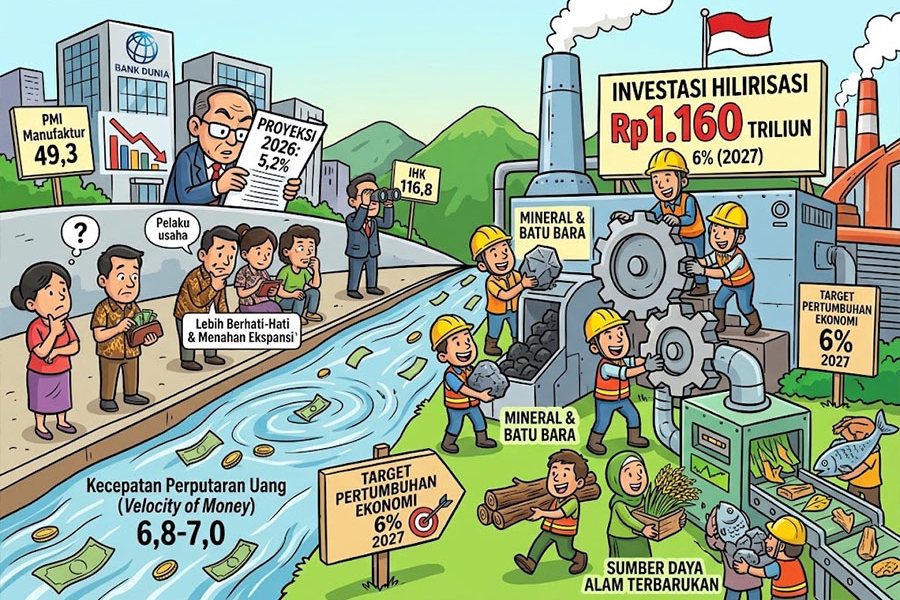
The Ministry of Finance indicates state budget deficit data that has widened to 2.35% of GDP as of late November 2025. This widening deficit occurs due to an imbalance between the pace of state expenditure and tax revenue that has not been optimal in the final quarter. This condition is exacerbated by tax authorities who recorded a sharp decline in consumption tax deposits of 6.6%, confirming that public purchasing power remains in a sluggish phase, thereby significantly suppressing domestic VAT revenue.
On the expenditure side, state spending realization until November 2025 reached IDR 2,911.8 trillion, or equivalent to an absorption rate of 82.5% of the total budget. Although the remaining budget is still quite large, the Vice Minister of Finance acknowledges that accelerating central and regional government spending is not easily done instantaneously at the end of this year. Administrative constraints and technical challenges in the field remain the primary obstacles for the government in boosting budget absorption aimed at driving economic circulation in the remaining time of the fiscal year.
To provide flexibility amidst these fiscal challenges, the Minister of Finance has detailed import duty exemption procedures for foreign aid to facilitate the flow of humanitarian assistance. This policy is taken so that the government can minimize logistical hurdles for international organizations wishing to contribute to social activities in Indonesia. This administrative step is part of the ministry's efforts to simplify bureaucracy amidst the country's major focus on maintaining macroeconomic stability and ensuring that aid funds can be distributed more efficiently.
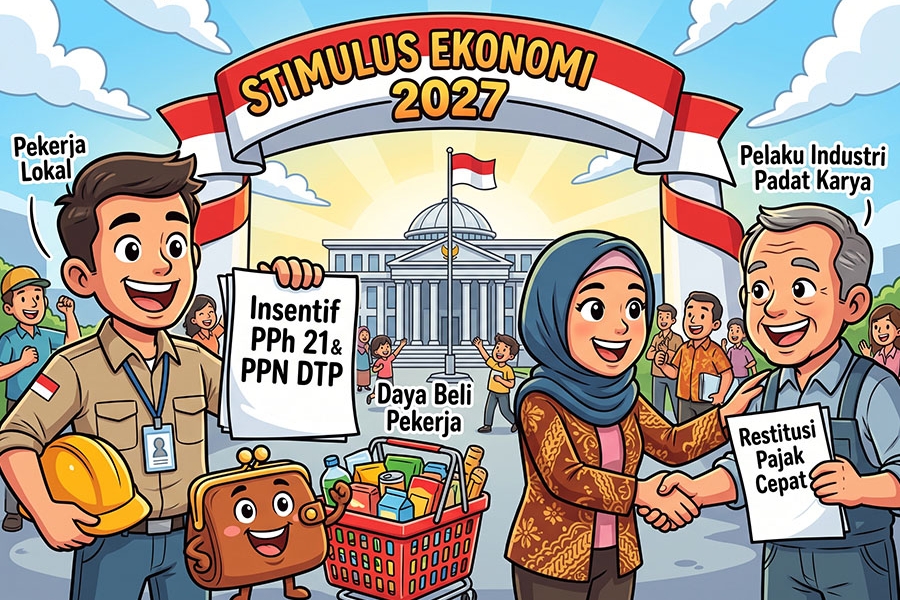
These spending dynamics and the decline in tax deposits carry direct implications for economic stimulus effectiveness and the 2026 fiscal posture. A deficit reaching 2.35% implies reduced fiscal room for maneuver for the government, requiring debt financing management to be conducted more cautiously to avoid burdening the following year. On the other hand, the 6.6% plunge in consumption tax implies the need for an evaluation of tax incentive policies that are better targeted to restore middle-class purchasing power. Meanwhile, the difficulty in accelerating regional spending implies a potential for high Unspent Budget Balances (SiLPA), meaning public funds remain stagnant in banks and fail to provide a maximum multiplier effect on local economic growth at year-end.
Overall, the government is currently in a difficult position to balance budget discipline with the need to stimulate a sluggish economy. Suboptimal spending realization and the decline in consumption tax serve as a report card requiring serious attention during this budget transition period. The government's success in simplifying bureaucracy—such as in aid import duty procedures—and spending efficiency in the remaining days of this year will be the primary keys to keeping Indonesia's macroeconomic stability resilient.

















 tpc.consulting
  tpc.consulting
  info@taxindo.co.id