




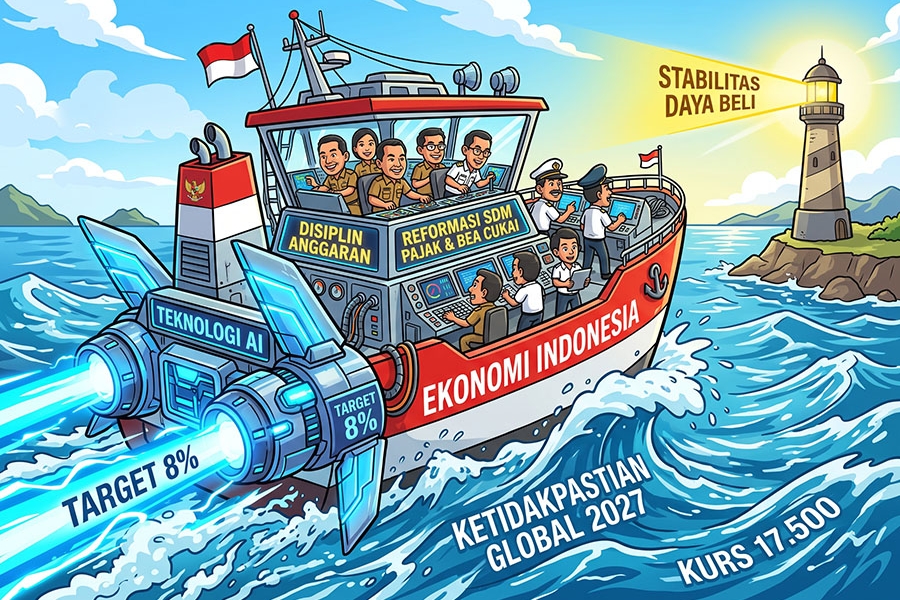
The Indonesian government is formulating strict fiscal efficiency measures in the 2027 Draft State Budget (RAPBN) to safeguard the resilience of the state budget. The Ministry of Finance is targeting high tax revenues while simultaneously cutting the expenditure budgets of ten key ministries and state agencies. Furthermore, the Ministry of Energy and Mineral Resources (ESDM) is reorganizing the distribution mechanism for the 3-kilogram LPG subsidy based on economic decile data. The decline in global gold prices, triggered by the release of United States inflation data, has also impacted the global commodity market. Business practitioners must understand the direction of these fiscal policies to mitigate future financial risks..
The Government of Indonesia is designing strict fiscal efficiency within the 2027 Draft State Budget (RAPBN 2027) to maintain state budget resilience amidst global economic dynamics. This strategic step integrates tax revenue overhaul, ministry expenditure efficiency, public subsidy structuring, and responses to international commodity market movements.
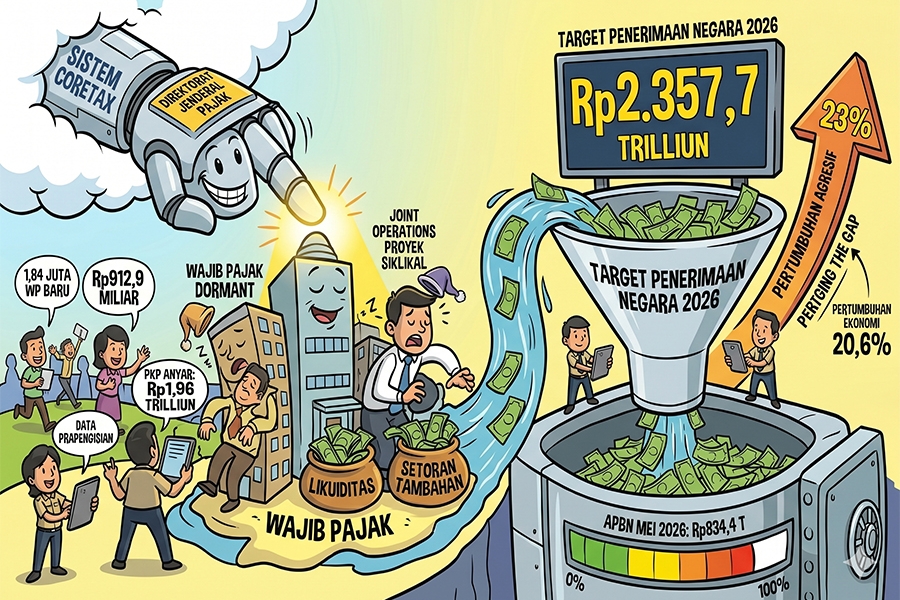
The Ministry of Finance targets an ambitious tax revenue goal in the 2027 Draft State Budget to cover continuously rising state expenditure needs. This high revenue target drives strict efficiency on the expenditure side, where the government has enacted significant budget cuts across 10 primary ministries and agencies. This operational efficiency policy aims to reallocate funds directly to national priority programs that address fundamental public needs.
Beyond agency expenditure cuts, the structuring of the state's fiscal burden also targets the subsidy and public financing sectors. The Government and the House of Representatives (DPR) are reviewing the 2027 Hajj pilgrimage financing scheme to reduce the portion of APBN direct subsidies that increasingly strain the state treasury. At the same time, the Ministry of Energy and Mineral Resources (ESDM) will regulate the distribution mechanism for 3 kg LPG based on economic decile data starting next year to ensure energy subsidy delivery is targeted and prevents leakage in the field.
Outside the realm of domestic fiscal policy, international economic dynamics also influence public financial asset movements. The global commodity market recorded a drop in world gold prices after relevant authorities released US inflation data that matched market expectations. This global macroeconomic condition dampened speculation over rate cuts by The Fed, causing gold's appeal as a safe-haven asset to undergo a temporary decline globally.
This series of budgetary policies, subsidy structuring, and commodity price dynamics carries strategic implications for various stakeholders. High tax revenue targets and ministry budget efficiencies require the business community to enhance tax administration compliance and anticipate tighter public spending absorption. At the same time, decile-based 3 kg LPG subsidy structuring and adjustments to Hajj financing portions alter consumption patterns and financial planning for the general public. Meanwhile, the decline in global gold prices opens opportunities for investment portfolio rebalancing for market participants in the commodities sector.
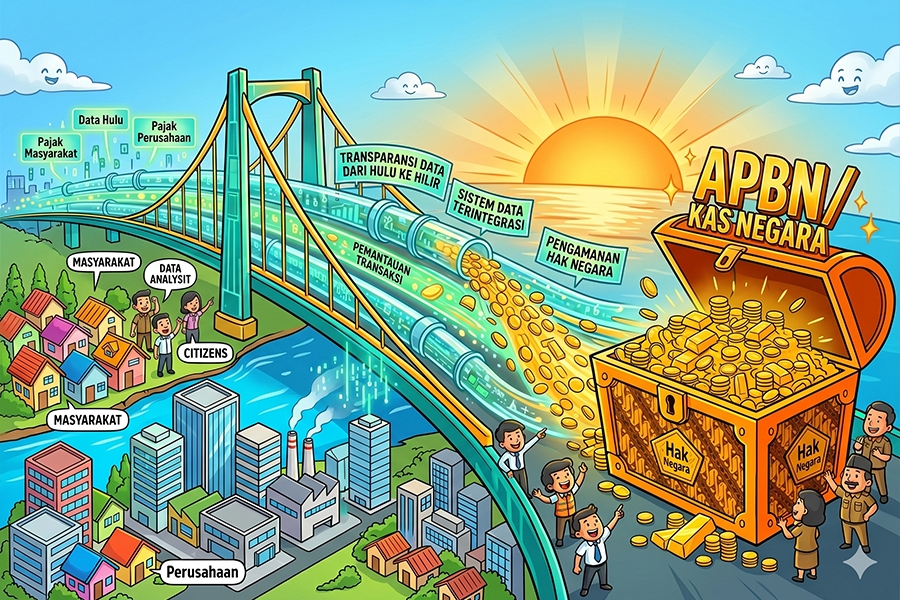
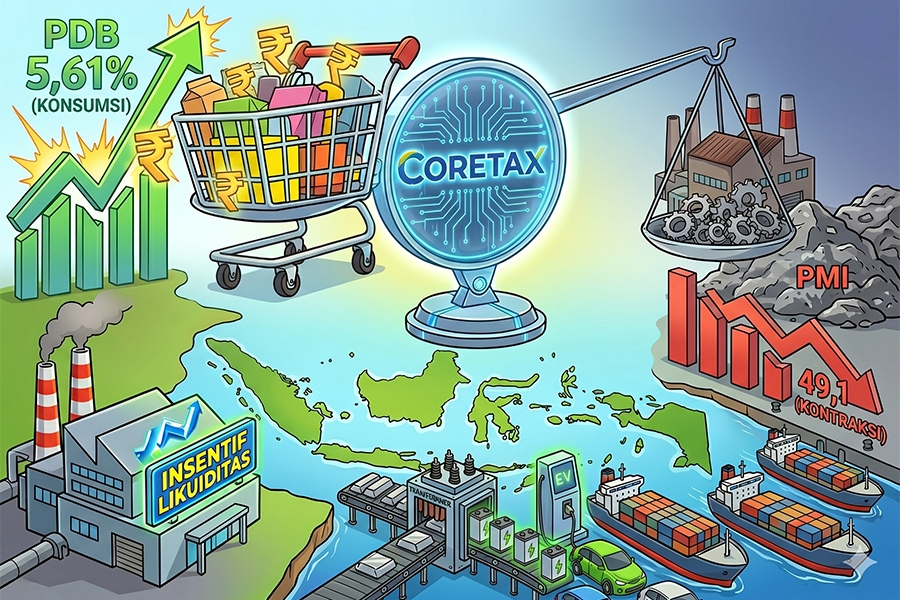
Overall, the integration of state budget discipline, public subsidy structuring, and responsiveness to global market dynamics serves as the primary key to maintaining national macroeconomic stability. A deep understanding of government fiscal regulatory directions and commodity market movements is critical for business players, investors, and the public to mitigate financial risks and maximize future growth opportunities.














 tpc.consulting
  tpc.consulting
  info@taxindo.co.id