


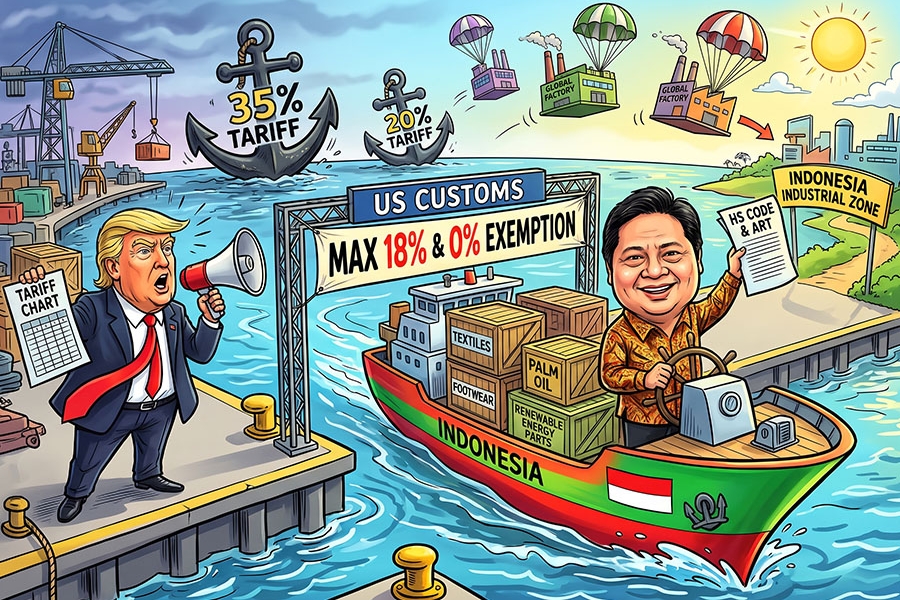
The United States government proposed new import tariffs of up to 18% on Indonesian goods through a Section 301 investigation into structural manufacturing excess capacity. Coordinating Minister for Economic Affairs Airlangga Hartarto confirmed that Indonesia's top tariff is capped at 18% without compounding levies, while securing 0% duty opportunities for select commodities under specific HS codes. The government is coordinating strategic actions with industrial associations to leverage tariff differentials against regional competitors and attract global manufacturing supply chain relocations..
The United States government under President Donald Trump officially announced proposed new import tariffs targeting at least 12 strategic trading partners, including Indonesia, which faces potential duties of up to 18%. This White House announcement follows extensive trade investigations launched in March 2026 after the US Supreme Court invalidated previous Liberation Day tariff measures. In the proposed schedules published by the United States Trade Representative (USTR), Indonesia and several regional peers face maximum tariffs of 18%, while proposed duties reach 20% for China and peak at 35% for Vietnam. This tariff determination by Washington authorities stems from thorough investigations into manufacturing capacity structures across Southeast Asia.
The Office of the USTR determined that Indonesia's industrial policies contribute to global structural excess manufacturing capacity that burdens and restricts United States commerce. American trade officials highlighted government interventions promoting production and exports, labor regulatory conditions, and supply chain reliance on non-market economic systems. These trade actions specifically target vital domestic sectors, particularly textiles and apparel, mining and metals processing, and renewable energy components.
Nevertheless, the proposed 18% tariff ceiling for Indonesian goods remains substantially more favorable than the 35% tariff facing Vietnam or the 20% duty facing Singapore. The USTR maintains an open public consultation process, inviting interested parties to submit written comments and hearing requests by January 5, 2027, ahead of formal public hearings beginning January 25, 2027. Responding to these protectionist proposals, the Indonesian government moved swiftly to reassure the commercial sector by highlighting established bilateral trade frameworks.
Coordinating Minister for Economic Affairs Airlangga Hartarto affirmed that Indonesia's trade position remains secure because the proposed tariff boundaries align with commitments under the bilateral Agreement on Reciprocal Trade (ART). Airlangga explained that this Section 301 excess capacity measure serves as a legal substitute for the International Emergency Economic Powers Act (IEEPA) tariffs previously dismissed by the US Supreme Court. The government emphasized that the 18% figure represents a statutory ceiling rather than a blanket levy imposed across all export commodities.
Authorities also confirmed specialized 0% duty treatments for key export commodities, including palm oil and select labor-intensive manufactured goods. Mutual commitments within the bilateral ART framework provide solid negotiating leverage for Indonesian delegations to mitigate global trade frictions. This statutory certainty was reinforced by government assurances dismissing concerns over cumulative tariff burdens on national exporters.
Coordinating Minister Airlangga confirmed that the maximum US import tariff on Indonesian products remains fixed at 18% and will not compound to 28%. This clarification addresses corporate concerns regarding the possible stacking of a prior 10% forced labor tariff with the newly proposed 18% excess capacity duty. Border duties entering the US market will vary across 0%, 10%, and a maximum of 18% depending strictly on international Harmonized System Code (HS Code) classifications.
Indonesian officials hold an effective two-month preparatory window before formal public hearings commence in Washington in January 2027. The earlier execution of the ART agreement in February 2026 equips Indonesian negotiators with vital diplomatic leverage to expand national tariff exclusion lists. Technical commodity classifications are now integrated into a comprehensive inter-agency strategy designed to transform tariff challenges into industrial expansion opportunities.
The Coordinating Ministry for Economic Affairs is organizing inter-agency consultations alongside technical ministries and commercial business associations to structure national response measures. Spokesperson for the Coordinating Ministry for Economic Affairs Haryo Limanseto stated that significant tariff margins favoring Indonesia over Vietnam (35%), India (25%), and China (20%) generate a distinct comparative advantage for domestic manufacturing. This dynamic presents an opportunity for textiles, footwear, metal processing, and renewable energy component makers to capture American market share while attracting global supply chain relocations to Indonesia.
The government and industry associations will participate actively in USTR public consultation sessions to negotiate broader product exemptions. Coordinated collaboration between regulators and corporate leaders remains essential to ensure bilateral Indonesia-United States commercial relations develop equitably and mutually beneficially.
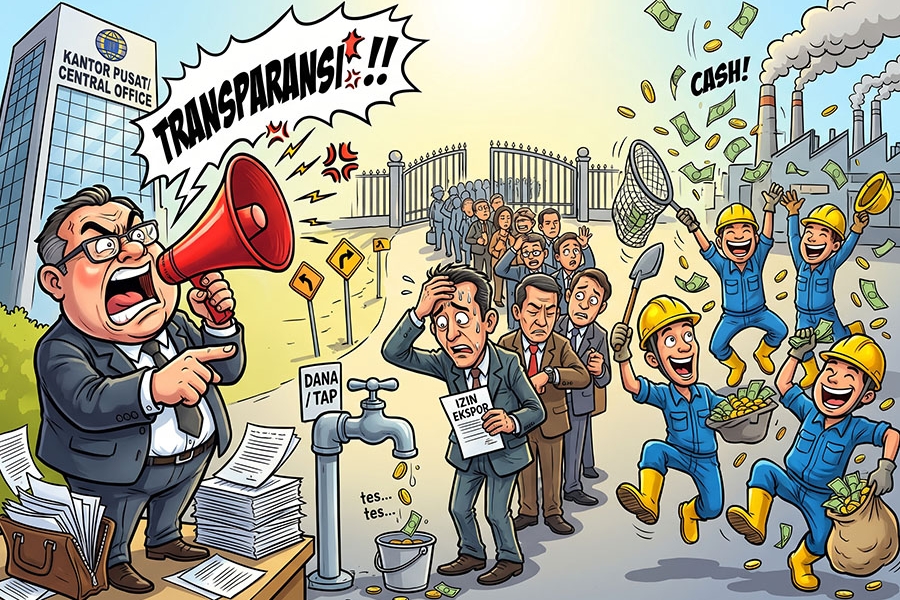
The proposed 18% US import tariff delivers tangible implications for manufacturing operators, multinational investors, and domestic employment stability. For exporters across textiles, footwear, and green energy hardware, favorable tariff differentials against primary regional rivals create immediate opportunities to capture new procurement contracts from American commercial buyers. Meanwhile, for investors, certainty against compounded 28% tariffs preserves capital market confidence, and for factory workers, guaranteed 0% duty treatments on core commodities protect labor-intensive industrial jobs.
In conclusion, addressing proposed 18% US import tariffs requires active bilateral diplomacy alongside measures to strengthen national industrial competitiveness. The government is advised to finalize priority exemption lists with business chambers and sector associations ahead of the January 5, 2027 deadline, while auditing supply chains to eliminate dependencies on non-market economic inputs. Export-oriented manufacturers should refine labor compliance records and verify product HS classifications to maximize market penetration and secure multinational factory relocations across Indonesia's industrial parks.










 tpc.consulting
 tpc.consulting
 info@taxindo.co.id