



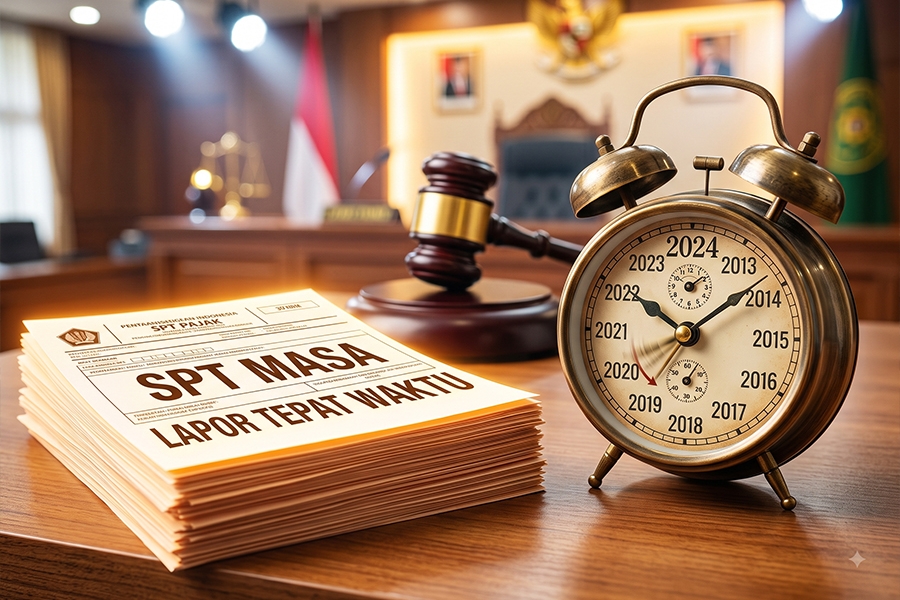
In the legal world, there is a fundamental principle known as the non-retroactive principle, which states that laws and regulations must not apply retroactively. This principle aims to provide legal certainty and protect citizens from being penalized or burdened with obligations under rules that did not exist when an action was taken. However, in Indonesian tax law, certain exceptions exist where government regulations or derivative policies may be applied retroactively.
How, then, does the application of retroactive regulations impact a Taxpayer's administrative compliance, and how do courts view its legal consequences?
In practice, the application of the retroactive principle is typically triggered by a transition period between a primary law and its implementing regulations (such as a Government Regulation/PP or a Minister of Finance Regulation/PMK). The stages are as follows:
When a tax exemption rule is declared retroactive, Taxpayers who have already collected and remitted conventional taxes during the transition period find themselves in a dilemma. Legally, the new rule requires backward adjustments.
The resulting administrative impacts include:
Textually (under formal law), when a Taxpayer files an amended tax return that results in a higher tax liability (Underpayment), the law prescribes administrative sanctions in the form of interest.
However, this is precisely where the legal dispute lies. The Tax Court frequently examines the correlation between Taxpayer fault and the emergence of the tax liability:
In adjudicating disputes concerning sanctions resulting from retroactive regulations, the Panel of Judges at the Tax Court does not merely view the law rigidly (legal positivism); it also considers the Principle of Fairness and the General Principles of Proper Administration (AUPB).
Referring to the principle of legal fairness (as reflected in L.J. van Apeldoorn's sociology of law), fairness means treating equal matters equally and unequal matters proportionally. Delays in regulation issuance by authorities constitute circumstances beyond the Taxpayer's control (force majeure). Imposing administrative interest sanctions on Taxpayers for a situation purely caused by the retroactive application of a regulation is considered improper and detrimental to the sense of justice.
In essence, applying retroactive rules in taxation demands that Taxpayers remain adaptive and responsive to transitional regulations. Although report amendments may trigger an "Underpayment" indicator within administrative systems, fair application of the law at the Tax Court continues to protect good-faith Taxpayers. Administrative sanctions ought to serve as an instrument to deter non-compliance, not as a tool to penalize situations arising from regulatory transitions where policy dates are retroactively pulled back by the state.













 tpc.consulting
  tpc.consulting
  info@taxindo.co.id