



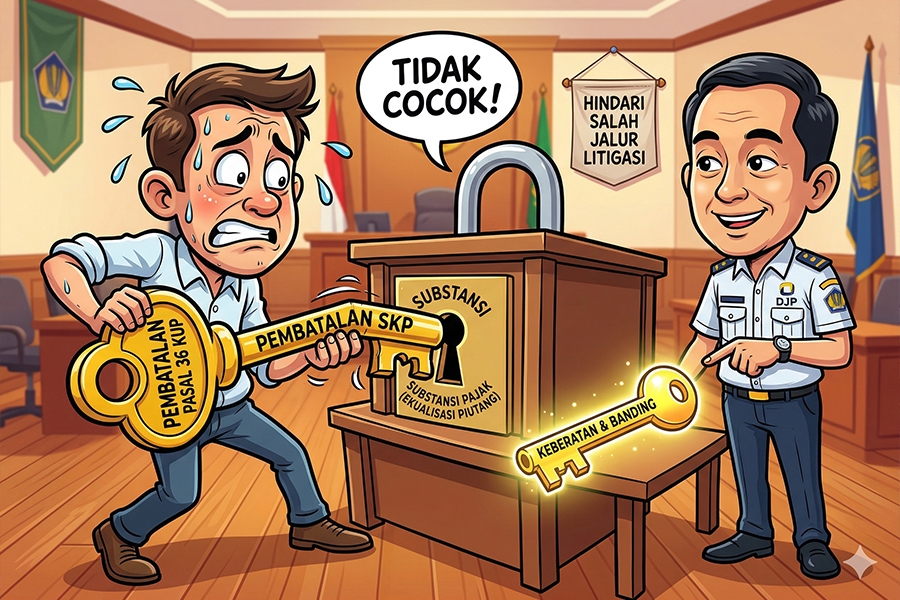
PT SCP's legal attempt to cancel a VAT assessment worth tens of billions of rupiah ended in failure at the Tax Court. The Panel of Judges emphasized that the mechanism for requesting the cancellation of a tax assessment based on Article 36 paragraph (1) letter b of the General Provisions and Tax Procedures Law (UU KUP) cannot be used to re-examine material substances that should fall under the domain of objection and appeal. This case stemmed from a tax audit that found a discrepancy in the VAT base through turnover equalization techniques and accounts receivable testing. The Directorate General of Taxes (DJP) identified unreported service delivery based on general ledger receivable mutations, while PT SCP argued the difference was merely a matter of revenue recognition timing.
The conflict escalated when PT SCP chose the lawsuit path after their cancellation request was rejected by the DJP. In court, PT SCP tried to prove that the auditor's accounts receivable test was inaccurate due to confusing opening balances and ignoring the turnover decline caused by the pandemic. However, the DJP maintained that the formal procedures for issuing the tax assessment had been legally met.
The Panel of Judges, in its legal considerations, provided a strict boundary. The Judges assessed that since PT SCP did not file an objection within the 3-month period as regulated by Article 25 of the UU KUP, PT SCP should not "seek a shortcut" by using Article 36 to debate the correction figures. An Article 36 lawsuit is only intended to check whether there were administrative errors or procedural violations by tax officials, not to judge the correctness of the correction figures.
The implications of this decision are crucial for tax practitioners. This ruling serves as a stern warning that precision in choosing the litigation path is key. Negligence in responding to a tax assessment through the objection path cannot be rectified through the cancellation path if the issue raised is a material substance issue. Taxpayers are required to be disciplined in documenting the reconciliation between commercial financial statements and VAT reporting to avoid falling into automatic equalization corrections by the tax authorities.













 tpc.consulting
  tpc.consulting
  info@taxindo.co.id