



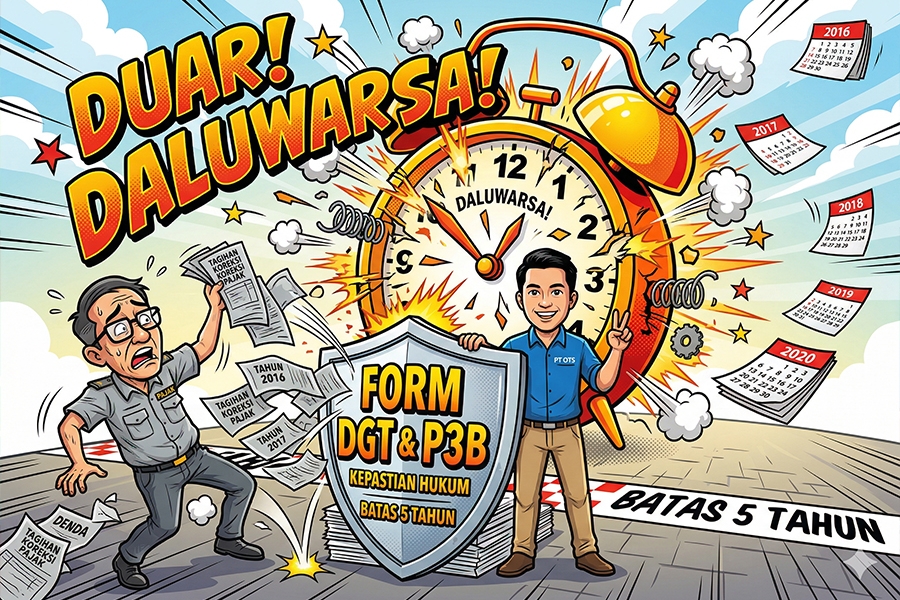
The tax dispute between PT OTS and the Directorate General of Taxes (DJP) highlights a critical aspect of the statute of limitations under Article 13 paragraph (1) letter a of the General Provisions and Taxation Procedures Law (UU KUP). The Tax Court, in this decision overturned a tax assessment of IDR 6,022,712,123.00 due to the DJP's failure to prove the specific timing of the tax liability and the violation of the five-year assessment deadline. The case originated from a cost equalization of operational expenses in the financial statements, which the DJP deemed as withholding tax objects for foreign taxpayers that had not been reported.
The core conflict centered on the attribution of the tax period and the classification of the objects. The DJP categorized IT and bookkeeping service fees as constructive dividends, arguing that PT OTS’s own positive fiscal correction in the Corporate Income Tax Return indicated the expenses were not business-related. Due to a perceived lack of detailed data, the DJP accumulated the entire year's correction into the December 2016 period. Conversely, PT OTS provided evidence that these transactions occurred throughout the year. PT OTS argued that the assessments for January to November were expired since the tax assessment letter (SKPKB in Indonesian) was only issued on December 13, 2021, exceeding the five-year threshold.
The Panel of Judges provided a resolution by prioritizing the principle of legal certainty. The Judges ruled that the DJP cannot arbitrarily consolidate an entire year's tax objects into a single month simply because of data limitations. Trial facts showed that the majority of transactions had passed the five-year period from the time the tax became due. Substantively, the presence of valid DGT Forms further strengthened the taxpayer's position, as the service transactions were subject to Tax Treaty provisions that granted taxing rights to the residence country, not Indonesia.
The implications of this ruling for tax practitioners are significant. This decision reaffirms that tax equalization must not ignore the principles of tax period cut-offs and expiration rules. PT OTS successfully won the appeal by exploiting the procedural weaknesses in DJP's assessment. For other taxpayers, this case serves as a reminder to maintain meticulous monthly transaction records. Administrative discipline in recording when a tax liability arises is the primary key to winning disputes involving statute of limitations issues.













 tpc.consulting
  tpc.consulting
  info@taxindo.co.id