



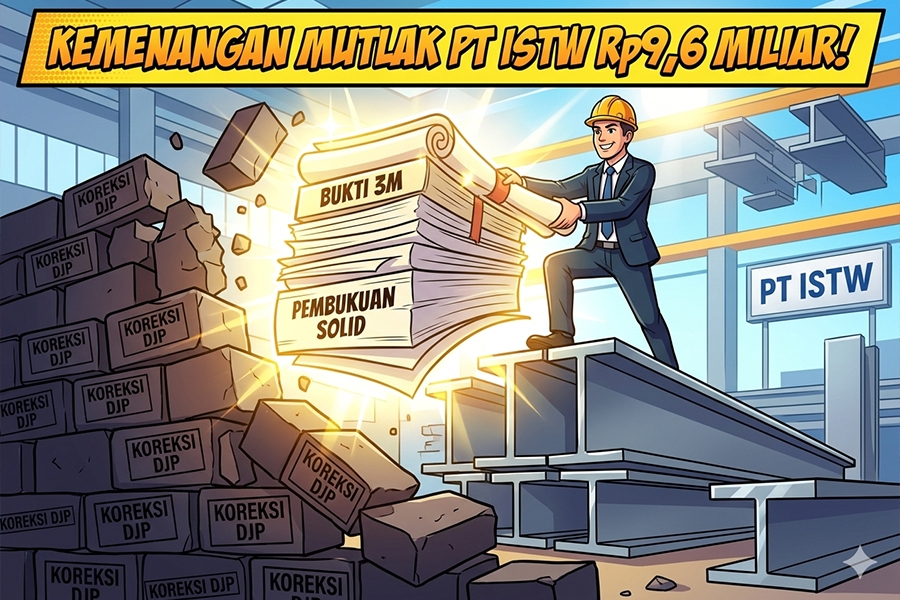
The issuance of a Tax Overpayment Assessment Letter (SKPLB) by the Directorate General of Taxes (DJP) frequently initiates a new chapter in Corporate Income Tax (CIT) disputes, particularly when the determined overpayment amount is less than what the Taxpayer requested. This case study involving PT ISTW demonstrates that the success of the Taxpayer in the appeal process hinges entirely on the strength of evidence related to the disputed expense or tax credit items. This Tax Court Decision which fully granted the steel company's appeal and set the CIT Overpayment at IDR 9,646,654,176.00, explicitly rejected the corrections made by the DJP.
The core conflict in this case is a battle of interpretation and substantiation over the principles of expense deductibility under the Indonesian Income Tax Law (UU PPh). The DJP, as the Respondent, maintained its corrections by arguing that certain expense items claimed by PT ISTW failed to meet the 3M criteria (Acquiring, Collecting, and Maintaining Income) or lacked adequate formal supporting evidence. This rejection automatically increased PT ISTW's fiscal taxable income, resulting in a reduced amount of tax refund.
Conversely, PT ISTW vehemently rebutted the basis of the corrections. They successfully presented comprehensive data, source documents, and explanations, proving that every expense claimed was legitimate, relevant to the business, and accurately recorded in the commercial books, subsequently adjusted fiscally in compliance with regulations. In the court proceedings, the Panel of Judges played a crucial role as the arbiter in this battle of evidence.
Based on legal considerations, the Panel of Judges determined that PT ISTW had successfully discharged its burden of proof. The evidence submitted was deemed more convincing and capable of invalidating the DJP's arguments. The DJP's failure to present strong, legally sound evidence to uphold its corrections was the key to PT ISTW's victory. The Panel ruled to revoke the Objection Decision and established the CIT Overpayment amount according to PT ISTW's calculation.
The analysis of this decision holds significant implications for corporate tax compliance strategies. This absolute victory emphasizes that in disputes involving SKPLB, the quality of documentation and the readiness to present detailed and logical evidence before the Tax Court are the primary determining factors. Taxpayers are encouraged not only to comply formally but also to be able to construct a coherent substantiation narrative backed by solid business facts.
A Comprehensive Analysis and the Tax Court Decision on This Dispute Are Available Here













 tpc.consulting
  tpc.consulting
  info@taxindo.co.id