



The object of the dispute between PT IB and the Directorate General of Taxes (DJP) stems from an administrative rejection of a request for the reduction or cancellation of an incorrect tax assessment. The issue became complex when the Tax Court had to examine whether a technical explanation letter from the DJP could be qualified as an Administrative Decision (KTUN in Indonesian) that can be the object of a dispute. The core of the conflict centered on the differing interpretations of the time limit for filing a lawsuit, where PT IB relied on the date of document receipt, while the DJP strictly adhered to the date of document dispatch.
The DJP argued that Letter Number S-1003/WPJ.03/2024 was merely administrative correspondence explaining why PT IB's request was returned, thus not fulfilling the material elements of a lawsuit object. On the other hand, PT IB felt its legal rights were violated because its request for material justice regarding the 2018 Income Tax Assessment was halted by bureaucratic procedures. PT IB tried to convince the Bench that a three-day delay from the dispatch date should be excused based on the principle of equity and the facts of physical receipt.
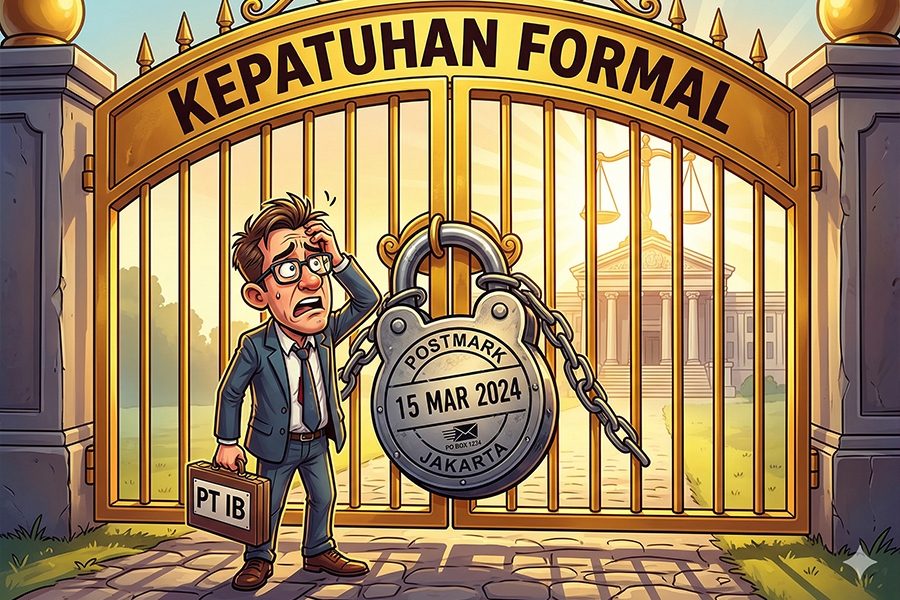
The Panel of Judges, in its legal considerations, emphasized the supremacy of Article 40 paragraph (3) of the Indonesian Tax Court Law (UU PP), which limitatively regulates the lawsuit period as 30 days from the date of dispatch. The Tax Court consistently applies the "Dispatch Theory" (postmark) to ensure legal certainty. Since the object being sued was not a decision with independent legal force and the filing had exceeded the specified time limit, the Bench had no legal basis to further examine the merits of the case.
This decision provides serious implications for tax practitioners that formal compliance is the main gateway to material justice. Any slight delay in formal procedures results in the lawsuit being inadmissible (Niet Ontvankelijke Verklaard), regardless of how strong the Taxpayer's substantive arguments are. Companies must tighten supervision over correspondence administration and ensure that the calculation of legal remedy periods always refers to the date the document was dispatched by the DJP.













 tpc.consulting
  tpc.consulting
  info@taxindo.co.id