



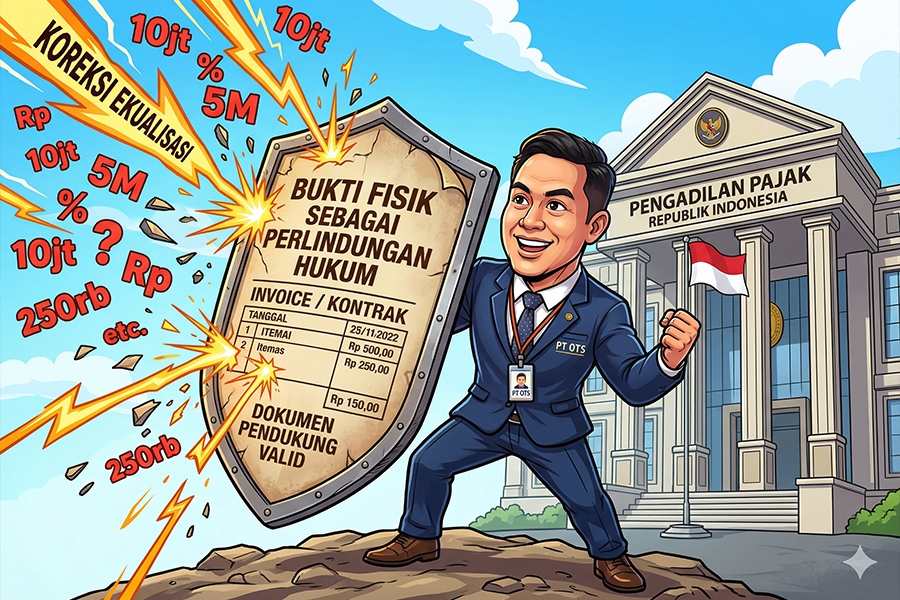
Tax authorities frequently employ equalization methods as a primary tool for adjusting business expenses during corporate income tax audits. However, the case of PT OTS demonstrates that these indirect testing methods can be overturned if the Taxpayer presents superior material evidence in court. The core of this dispute lies in the interpretation of impairment provisions and the validity of Withholding Tax (WHT) Article 26 equalization on professional services.
The conflict arose when the Directorate General of Taxes (DJP) issued a positive correction of IDR 6,071,361,452.00 on operating expenses. The DJP argued that the bad debt provision violated Minister of Finance Regulation Number 219/PMK.011/2012 (PMK 219/2012) and identified professional fees allegedly subject to WHT Article 26 based on equalization discrepancies. Conversely, PT OTS contended that no impairment expense was charged in the current year, as the figure in question was a cumulative balance sheet item. Furthermore, the discrepancy in the service account was attributed to goods purchases, which are legally exempt from withholding tax.
The Panel of Judges established a significant evidentiary precedent in their legal considerations. The Panel emphasized that corrections to bad debt provisions are groundless if no corresponding expense is debited to the Income Statement for the relevant period. Moreover, the Panel rejected the DJP's equalization method for professional services, labeling it an indirect test lacking material proof, whereas PT OTS successfully evidenced the inclusion of goods transactions within the account.
The "Fully Granted" verdict reinforces the necessity of accurate account classification in bookkeeping. For tax practitioners, this case serves as a reminder that balance sheet data must align with the expense narrative in the profit and loss statement. PT OTS's victory underscores that primary source documents, such as invoices and contracts, remain the ultimate evidence capable of overriding DJP's assumptions based solely on numerical differences.













 tpc.consulting
  tpc.consulting
  info@taxindo.co.id