




A VAT dispute worth IDR 46.47 billion involving PT Federal Nittan Industries (FNI) provides a crucial lesson on the urgency of data source accuracy in digital tax audits. This correction arose from the Respondent's unilateral interpretation of the company's SAP system raw data (dumping data), which was deemed to reflect VAT-taxable turnover but was not reported in the February 2016 VAT Return. The Tax Court's rejection of the entire correction reaffirms that accounting system data cannot stand alone as a legal basis without verification of valid source documents in accordance with Article 13 of the VAT Law.
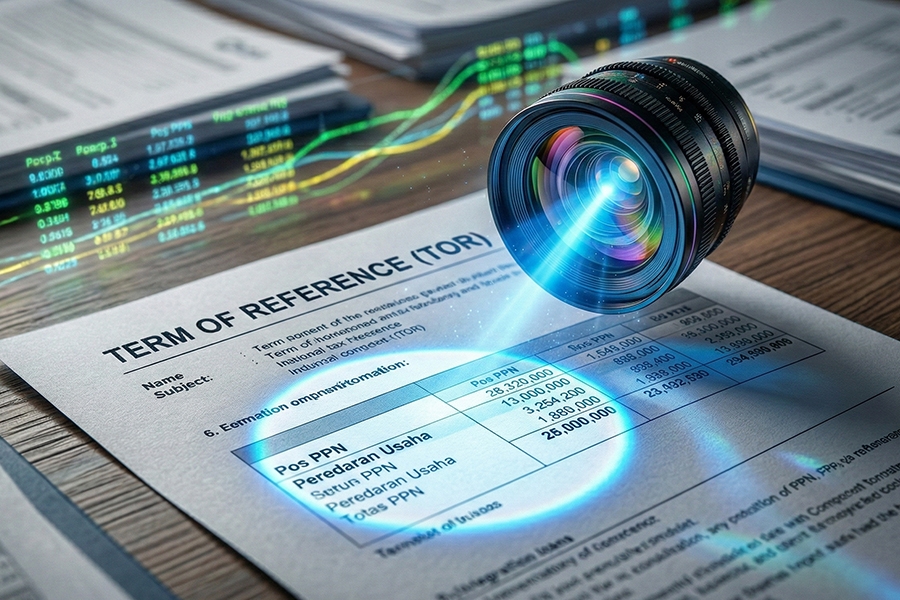
The conflict centered on the methodology of electronic data extraction by Tax Auditors. The Respondent used dumping data from SAP and compared it with the tax return, resulting in a significant discrepancy. On the other hand, PT FNI argued that the Auditor extracted data from the wrong accounts, which included dummy transactions, internal warehouse mutations, and down payments that were not yet recognized as taxable deliveries under Article 1 paragraph 17 of the VAT Law. PT FNI was able to prove through General Ledger and reconciliation that all actual deliveries of taxable goods had their Tax Invoices issued in a timely manner.
In its legal considerations, the Panel of Judges emphasized the principle of fair evidence. The Judges found that the Respondent failed to conduct comprehensive product and document flow tests, instead relying solely on nominal figures in an unverified electronic system. Since PT FNI successfully presented physical evidence in the form of Tax Invoices and Sales Registers that synchronized with tax reporting, the Respondent's assumption of additional deliveries was declared groundless. This legal resolution led to the cancellation of the entire VAT base correction due to the lack of strong material evidence.
This decision has significant implications for Taxpayers using complex ERP systems like SAP. PT FNI's victory proves that the self-assessment system grants Taxpayers the right to defend the truth of their data through detailed reconciliation evidence. In conclusion, the validity of tax corrections must be based on economic substance and formal evidence, not just numerical differences resulting from automated data extraction that may contain technical distortions.
A Comprehensive Analysis and the Tax Court Decision on This Dispute Are Available Here









 tpc.consulting
  tpc.consulting
  info@taxindo.co.id