



Indonesia's economy is currently characterized by two intersecting dynamics regarding potential state revenue and domestic market resilience. In the physical goods trade sector, the government found discrepancies in import data from China indicating under invoicing practices, which suppresses the competitiveness of domestic Micro, Small, and Medium Enterprises (MSMEs). Conversely, in the digital sector, tax authorities successfully recorded a significant increase in tax revenue, dominated by the Value Added Tax on Trade Through Electronic Systems (PPN PMSE) deposits from various marketplaces.
Indonesia's economy is facing two contrasting conditions in the context of optimizing state revenue and protecting the domestic market. On one hand, the government is attempting to overcome the loss of potential income due to the influx of imported goods that are not fully recorded. However, on the other hand, tax authorities have successfully secured large amounts of revenue from the continuously growing digital economy sector.
Regarding the flow of physical goods, the Minister of Micro, Small, and Medium Enterprises (MSMEs), Maman Abdurrahman, revealed a significant data gap between China's export records to Indonesia and the official import data recorded by Indonesian customs. This recording discrepancy is strongly suspected to be related to under invoicing practices, a condition where some imported goods enter without being fully recorded in the national customs system, which was also previously mentioned by President Prabowo Subianto. This condition not only erodes potential state revenue from the import sector but also becomes a social issue as it suppresses the competitiveness of domestic MSME players due to the flood of unrecorded foreign products.
Based on UNTrade 2024 data processed by the Ministry of MSMEs, this recording discrepancy is massively visible in textile, apparel, and footwear commodities. The details of the commodities experiencing the largest recording discrepancies include:
Amidst the recording challenges in the physical goods flow, the government has actually recorded massive success in collecting taxes from digital transactions. The Directorate General of Taxes (DJP) reported that as of January 31, 2026, total tax revenue from the digital economy sector had reached Rp47.18 trillion. This figure is an accumulation of revenues since 2020.
The revenue from the digital economy sector is dominated by the Value Added Tax on Trade Through Electronic Systems (PPN PMSE) which contributed Rp36.69 trillion. This tax is collected by marketplaces and digital platforms such as Shopee, Tokopedia, and other similar applications. The PPN PMSE deposit trend continues to increase, with specific realization in 2025 alone reaching Rp10.32 trillion. As of the end of January 2026, the government has appointed 242 companies as PPN PMSE collecting entities.
Besides PPN PMSE, other digital economy sectors that also provided massive contributions include taxes from crypto transactions worth Rp1.93 trillion, financial technology (fintech) taxes amounting to Rp4.47 trillion, and other digital economy taxes received through the Tax Complaint Information System (SIPP) amounting to Rp4.1 trillion. This achievement reflects the increasingly large contribution of the digital economy to state revenue.
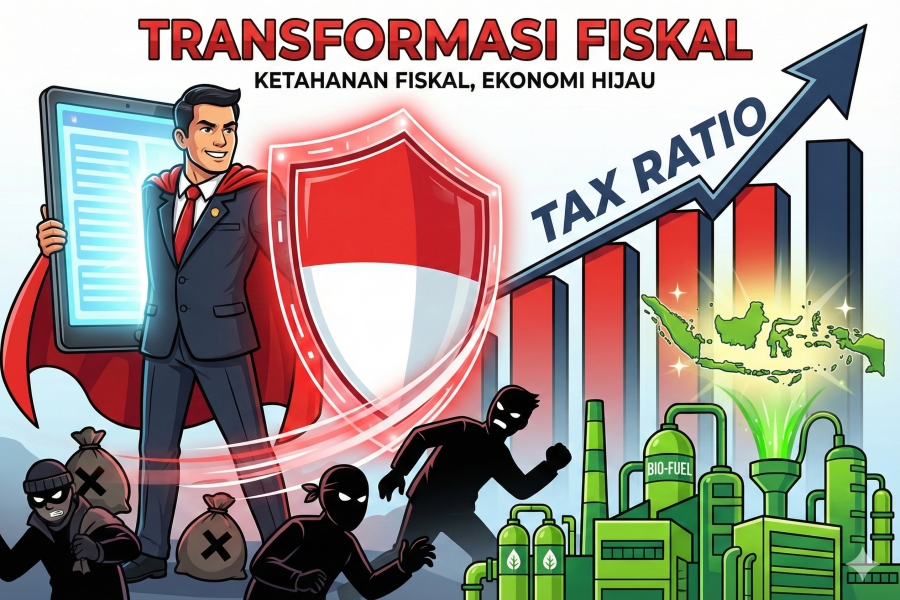
These two phenomena show the importance of policy synchronization in economic supervision. The success in tracking and collecting taxes in the digital sector is expected to serve as momentum to improve the supervision system at physical customs borders. This step is absolutely necessary to ensure that the prevention of under invoicing practices runs effectively, so that state revenue can be comprehensively optimized while protecting the resilience of local MSME players in the domestic market.


















 tpc.consulting
  tpc.consulting
  info@taxindo.co.id