


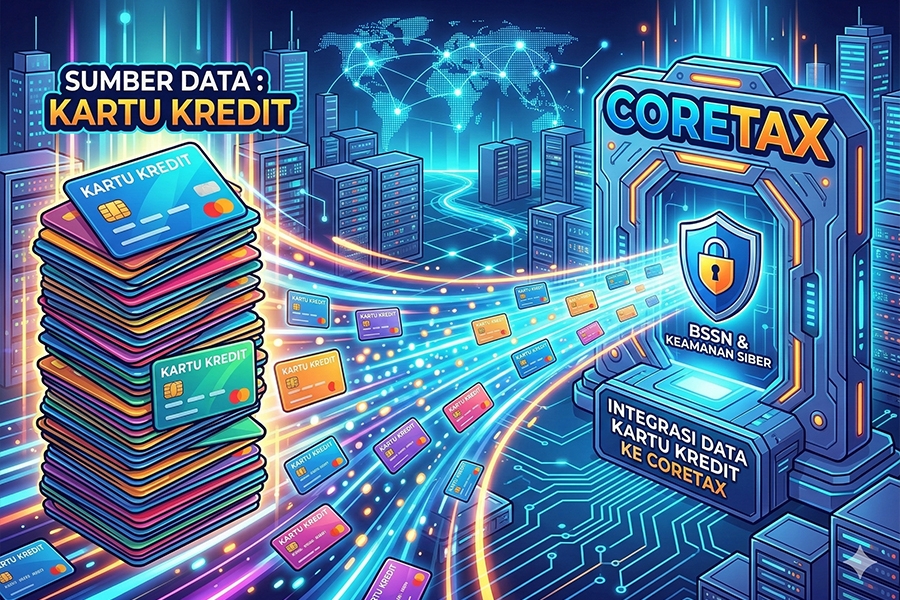
The Ministry of Finance has officially broadened the scope of tax oversight through PMK No. 8 of 2026, mandating 27 financial institutions to surrender specific historical credit card transaction data from merchants. This policy is bolstered by the imminent launch of the Coretax Mobile platform and absolute cybersecurity guarantees from multiple state intelligence bodies. This strategic maneuver is engineered to map taxpayer compliance with precision and eliminate shadow economy loopholes without disrupting legitimate business climates.
The national tax regulatory landscape is undergoing a fundamental shift following the enactment of Minister of Finance Regulation (PMK) No. 8 of 2026, which effectively supersedes the previous PMK 228/2017 framework. Fiscal authorities have broadened the reporting mandate from 23 to 27 banking entities and credit card service providers. These financial institutions are compelled to submit electronic data clusters online on an annual cycle, with the inaugural submission deadline firmly set for March 2027. This regulatory transition serves as the foundational bedrock for an oversight ecosystem that demands vastly more granular data classifications at the operational level.
Authorities mandate financial institutions to deconstruct transaction data into highly specific variables based on the bank's role as an acquirer. The profile specifications required for submission encompass institutional identities, merchant profiles, registered National Identity Numbers (NIK) or Taxpayer Identification Numbers (NPWP), and precise operational addresses. Once merchant profiles are fully validated, credit card operators must calculate financial volume matrices encompassing the transaction settlement year, the aggregate total of successfully settled transactions, and the accumulated nominal value of all consumer-cancelled transactions. These massive financial flow details necessitate high-tier security architectures to preempt any potential leakage of strategic information.
Addressing public apprehension regarding financial data exposure, the government provides an absolute guarantee of customer confidentiality as mandated by Article 34 of the General Provisions and Tax Procedures (KUP) Law. The Directorate General of Taxes' digital infrastructure has undergone multi-layered penetration testing validated by the National Cyber and Crypto Agency (BSSN), the Ministry of Communication and Digital, and strategic intelligence agencies including BIN and BAIS. Concurrently with these bolstered security protocols, relevant authorities are preparing to roll out the Coretax Mobile application within the next fortnight to facilitate highly efficient administrative reporting. Analysts from the Institute for Development of Economics and Finance (Indef) assert that the public need not worry as long as transactions remain legitimate, noting that this data proxy specifically targets large-scale non-compliance.
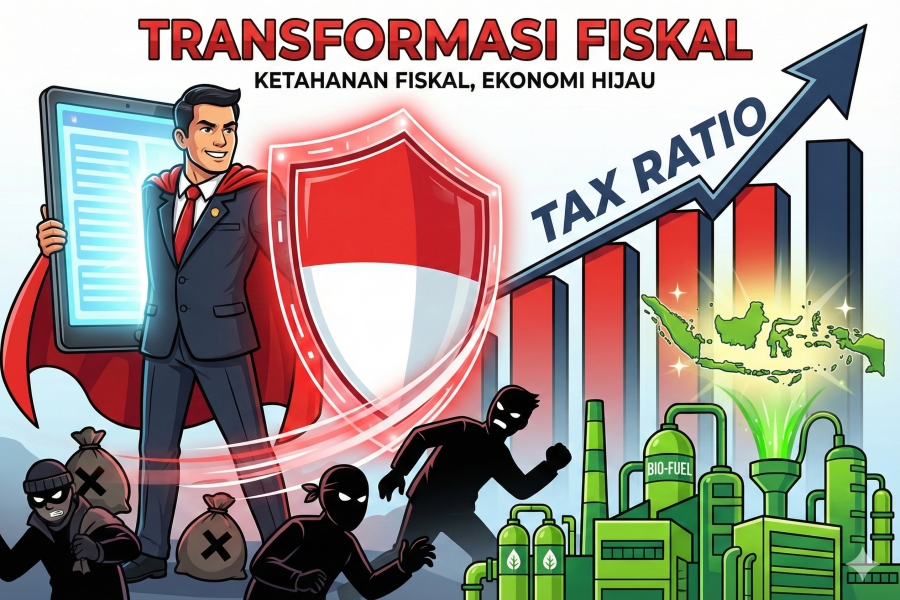
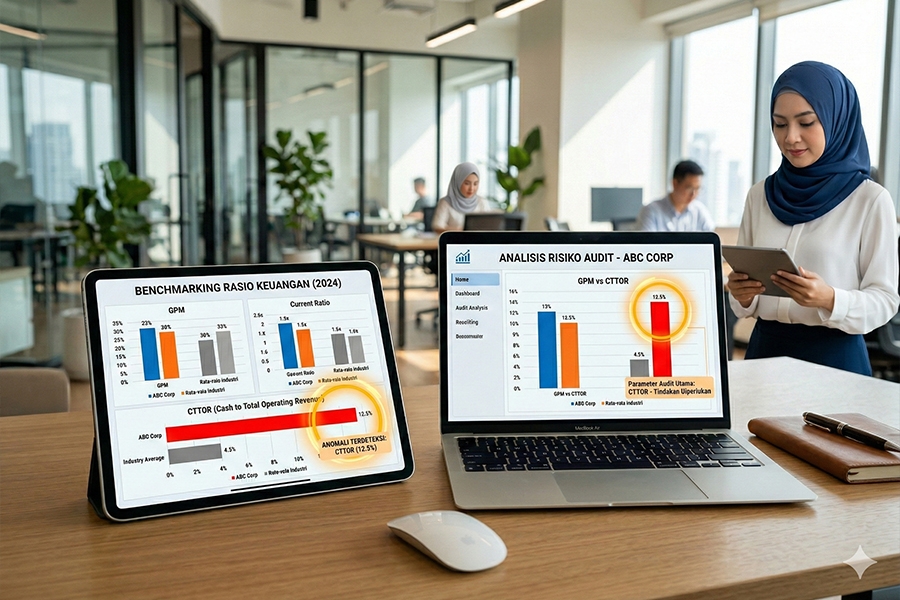
The comprehensive integration of credit card settlement variables and merchant profiles generates a dual catalyst that transforms traditional revenue reporting methodologies. By cross-referencing the digital footprints of cashless payments with Annual Tax Returns (SPT), government oversight algorithms can autonomously detect discrepancies or revenue under-reporting residues within the retail and hospitality sectors. For the banking ecosystem, this reporting compliance invariably necessitates a surge in technological adaptation overheads during the transition phase; however, on a macroeconomic scale, this big data consolidation will bolster the national tax ratio, subsequently expanding the state budget's fiscal capacity.
State revenue optimization via the absolute deconstruction of financial data manifests a new era of digital evidence-based fiscal oversight that is functionally immune to manipulation. Business operators across all scales are highly recommended to accelerate the modernization of their internal sales recording systems to seamlessly align with banking records ahead of the 2027 deadline, while investors should price in long-term economic stability underpinned by significantly more precise tax collection foundations.
















 tpc.consulting
  tpc.consulting
  info@taxindo.co.id