




The tax dispute over the 2014 Corporate Income Tax between PT SI and the Directorate General of Taxes (DJP) highlights the complexity of applying the Arm's Length Principle (ALP) to intra-group service transactions. This case centered on the total correction of an intra-group Service fee amounting to USD 1,370,515.00 paid by PT SI to its affiliates in Japan and Hong Kong. The DJP argued that this payment exceeded arm's length, citing Article 9, paragraph (1), letter f of the Indonesian Income Tax Law (UU PPh) to categorize it as a non-deductible disguised dividend.
The core conflict in the trial revolved around two pivotal issues: the arm's length price testing and the substantiation of service substance. PT SI convincingly maintained that the service transactions were already at arm's length using the Transactional Net Margin Method (TNMM) and the Berry Ratio:
$$\text{Berry Ratio} = \frac{\text{Gross Profit}}{\text{Operating Expenses (Excluding Service Fees)}}$$
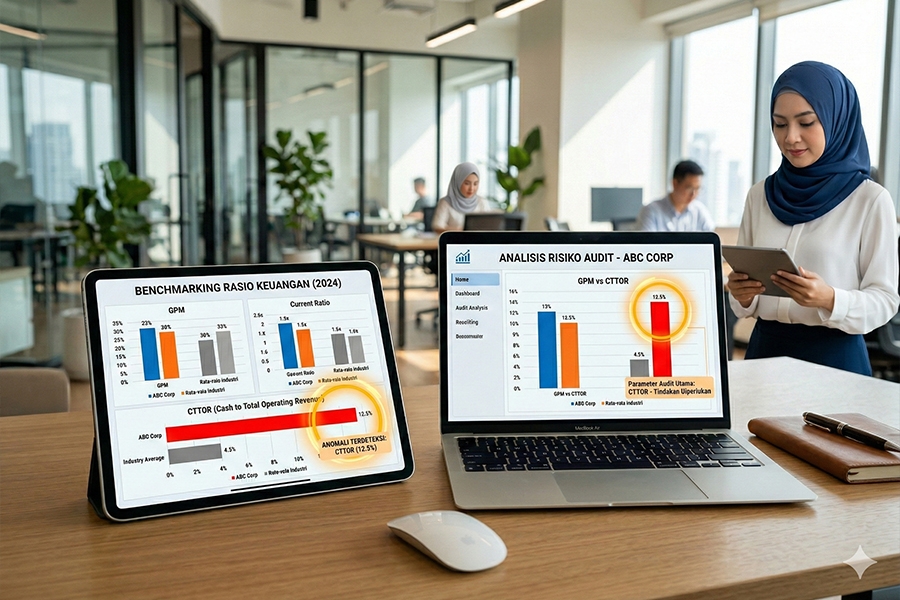
PT SI achieved a ratio of 2.07, which the Tax Court validated was above the upper quartile of the arm's length range (1.52). Conversely, the DJP rejected these findings, arguing that the fixed fee nature of the cost, paid without detailed time sheets, indicated a lack of genuine benefit.
The Tax Court panel determined that the DJP failed to meet its burden of proof. The Judges emphasized that a total correction of 100% without attempting to adjust the price to the arm's length range is inappropriate and contravenes Article 18, paragraph (3) of the UU PPh. The Court accepted the evidence regarding the existence of business support and vital intra-group IT system services, concluding that the DJP's correction lacked a strong legal basis and was fully reversed.
This ruling reinforces the principle that a superior burden of proof lies with the Taxpayer, but the DJP is also bound by correct procedural requirements. PT SI’s victory demonstrates that the Berry Ratio can serve as a valid Profit Level Indicator (PLI) for distribution or service functions. The key takeaway is that Taxpayers must ensure their Local File not only focuses on pricing but also on robust service substance documentation, including internal correspondence and utilization reports, to meet the stringent Benefit Test requirements.









 tpc.consulting
  tpc.consulting
  info@taxindo.co.id